Sleeve Tattoo Planning Guide: Theme, Flow & Sessions
Plan a half or full sleeve tattoo: theme, anatomy, flow, existing work, sessions, pricing, healing and artist selection.

A sleeve tattoo is not simply a collection of images filling an arm. At its best, it is a composition designed around a moving, three-dimensional body. Theme, scale, contrast, anatomy, existing tattoos, healing and budget all need to work together. This guide explains how to plan a half or full sleeve before the first major session.
What counts as a sleeve tattoo?
The word “sleeve” is used broadly, but coverage and composition are different questions:
- Quarter sleeve: covers part of the upper arm or forearm.
- Half sleeve: usually runs from shoulder to elbow or elbow to wrist.
- Full sleeve: connects shoulder, upper arm, elbow, forearm and wrist as one project.
- Patchwork sleeve: builds a deliberate collection of separate tattoos with controlled spacing or shared character.
A true sleeve does not have to be visually dense everywhere. Negative skin, soft transitions and open areas can be part of the design.
Plan the whole arm before the first large piece
You do not need every final detail drawn on day one, but you should know the direction of the entire arm. A large image placed without thinking about the shoulder, elbow and wrist can block better options later.
Before starting, decide:
- where the main focal points will sit;
- which areas should remain lighter or open;
- whether the project ends at the wrist, elbow or shoulder line;
- how the inner and outer arm connect;
- whether future chest, back or hand extensions are possible.
Concept sleeve or patchwork sleeve?
A concept sleeve uses one visual world, theme or narrative across the arm. Major subjects, background and transitions are planned together. A patchwork sleeve treats separate tattoos as a collected system; the unity may come from line weight, palette, spacing, style or recurring symbols.
Neither approach is automatically better. Problems appear when a concept sleeve is built like random patchwork, or when an intentionally open patchwork arm is later forced into a heavy background.
Choose a theme without overcrowding the story
A sleeve can contain personal history, portraits, animals, botanical forms, mythology, landscapes or abstract movement. Not every idea needs equal size. Select one or two principal subjects and let secondary motifs support them.
A useful brief separates ideas into three groups:
- Essential: the subjects or symbols that must be present.
- Flexible: elements that may change scale, position or interpretation.
- Optional: details that can be removed if they weaken readability.
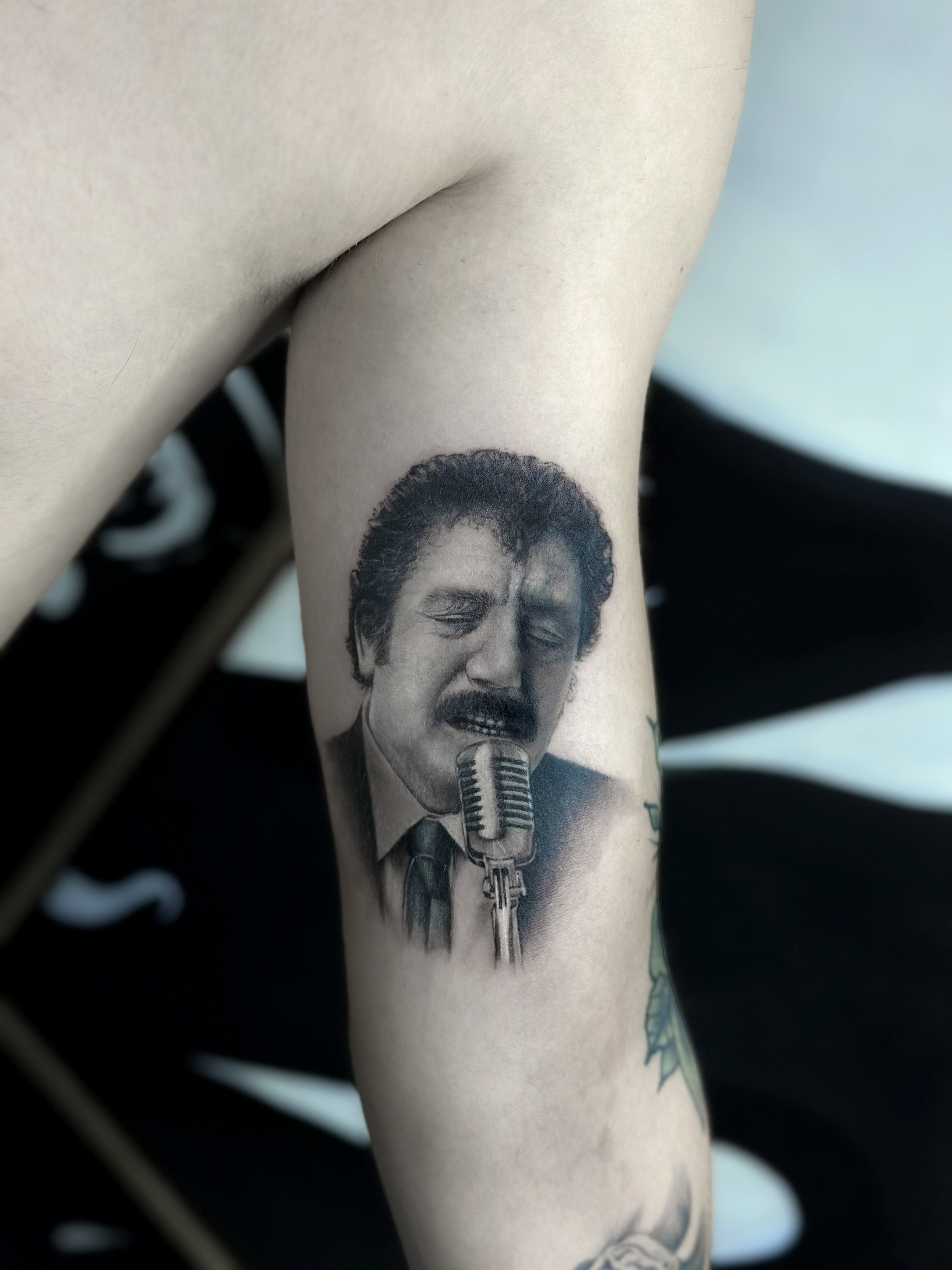
Design for anatomy and movement
An arm is not a flat rectangle. It narrows, rotates and bends. Shoulder cap, biceps, triceps, elbow, forearm and wrist each offer different shapes and movement. A strong composition is checked with the arm relaxed, raised and bent.
Important faces, eyes and readable symbols usually need stable focal areas. Transitional textures, smoke, botanical movement, geometric rhythm or selected negative space can help the eye travel around joints without making them look like accidental gaps.
Use contrast and negative space deliberately
If every centimetre has the same darkness, detail and edge strength, the arm may become visually flat. Contrast creates hierarchy. Dark masses can frame lighter skin; sharp detail can sit beside softer passages; open skin can separate major forms.
This is especially important in realism and black-and-grey work, where tonal planning must remain legible from normal viewing distance—not only in a fresh close-up photograph.
Black and grey, colour, fine line or mixed style?
Style affects both the design and the session plan. Black-and-grey realism relies on value structure and transitions. Colour requires a controlled palette and consideration of how adjacent hues interact. Fine line can create elegant movement but needs appropriate scale and spacing. Graphic blackwork depends on strong silhouette and negative space.
Mixing styles can work when the contrast is intentional. It should not look like unrelated references were placed together without a common visual language. The fine line tattoo guide explains scale and longevity in more detail.
What if the arm already has tattoos?
Existing tattoos can sometimes be integrated, balanced, softened or covered, but each option needs an honest assessment. Send clear photographs of the entire arm in natural light, plus close-ups of the old work. Its colour, darkness, scarring, position and age affect what is possible.
A cover-up usually requires more visual weight and cannot be planned like blank skin. In some cases, leaving space, reworking selected areas or discussing laser reduction with a qualified medical professional may create a better long-term result.
How many sessions does a sleeve take?
There is no responsible universal number. Coverage, detail, colour, placement, existing tattoos, skin response, session length and how comfortably the client sits all change the timeline. A full sleeve is normally a multi-session project and may develop over months.
Sessions can be divided by anatomical zone or by stages such as main subjects, secondary forms, background, colour or tonal development and final adjustments. The next appointment should respect how the previous area has healed; speed is not more important than skin and quality.
How sleeve tattoo pricing works
Large projects are usually estimated through design scope and expected sessions rather than centimetres alone. Complexity, style, cover-up requirements, colour, drawing time and session duration affect the total. The project may evolve if the design or coverage changes.
Ask what the quote includes and how individual sessions are priced. For general studio starting information and the factors behind pricing, read the Antalya tattoo prices guide.
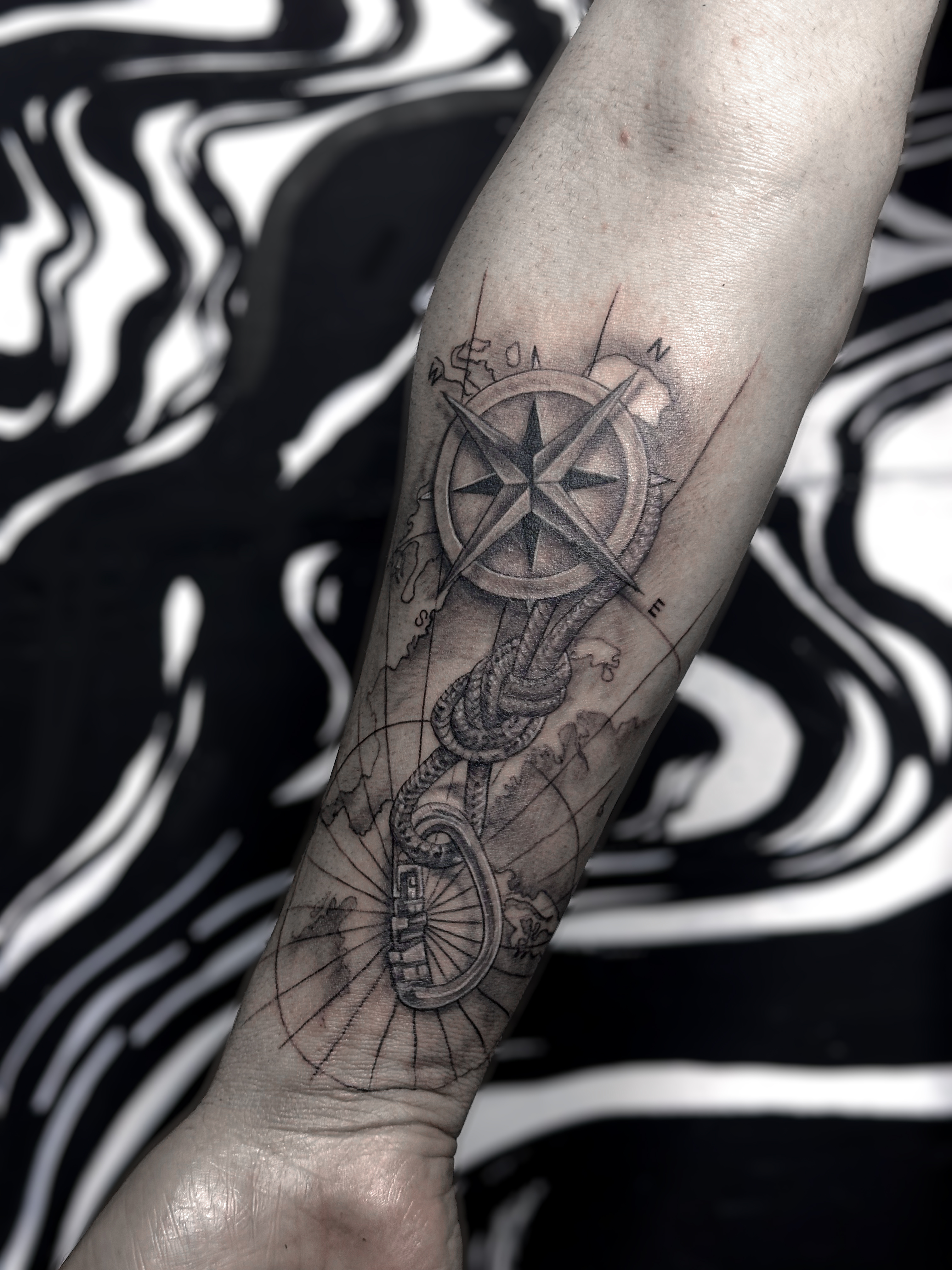
Pain, difficult zones and session endurance
Pain is individual. Inner arm, elbow crease, elbow, wrist and areas close to the armpit are often more sensitive, but experience varies. Long sessions also create fatigue even in areas that initially feel manageable.
Arrive rested, eat beforehand, hydrate and wear clothing that gives easy access to the arm. Avoid alcohol and do not use numbing products without discussing them with the artist. It is better to plan realistic sessions than to force the body through a schedule.
Healing between sleeve sessions
Each worked area needs clear aftercare and time to recover. Do not scratch or pick peeling skin. Swimming, intense sun, friction and unsuitable exercise can interfere with a fresh tattoo. Follow the instructions given for the specific session.
Read the tattoo aftercare guide for a complete routine. After the tattoo is fully healed, long-term sun protection helps preserve its appearance. The American Academy of Dermatology recommends protecting healed tattooed skin from ultraviolet exposure and consulting a dermatologist about unusual reactions or changes.
Planning a sleeve while visiting Antalya
A sleeve should not be squeezed into a short holiday as if it were one small appointment. If you are travelling, share your dates early. We can assess whether one logical stage is realistic and plan future sessions without rushing healing.
Antalya sun, sea and pools matter. Schedule tattooing around swimming and strong sun rather than assuming normal holiday activities can continue immediately after a large session.
How to choose the artist for a sleeve
- Review large, coherent projects—not only isolated close-ups.
- Look for anatomy, flow and contrast from multiple angles.
- Check whether the artist's portfolio supports your intended style.
- Choose someone who can simplify ideas and explain trade-offs.
- Discuss communication, scheduling and continuity across multiple sessions.
Since 2010, my work across painting, mural art, graffiti and tattooing has shaped how I build large compositions, focal points and movement around the body.
What to send for a sleeve consultation
- clear photographs of the entire arm from front, back, inside and outside;
- close-ups of existing tattoos or scars;
- whether you want quarter, half or full coverage;
- essential subjects and the story behind them;
- preferred style, black-and-grey or colour direction;
- your approximate timeline, city and availability;
- references showing mood—not images to be copied exactly.
Frequently asked questions
Should I start at the shoulder or forearm?
There is no automatic answer. The strongest starting zone depends on the main subject, future coverage, visibility and existing tattoos. The whole-arm map should guide the first placement.
Can different artists work on one sleeve?
Yes, especially in a deliberate patchwork collection, but cohesion becomes more complex. For one continuous concept, a single artist or closely coordinated plan usually makes transitions easier.
Must the elbow be completely filled?
No. The elbow can be integrated, framed or partly left open depending on style and movement. It should look intentional from the beginning.
Can a sleeve be completed in one session?
A true full sleeve is generally a multi-session project. Exact duration cannot be determined without assessing coverage, detail, skin, style and existing work.
Can I begin with a half sleeve and extend it later?
Yes. Tell the artist from the start that extension is possible so the edge, flow and focal placement do not block a future full sleeve.
Plan a custom sleeve tattoo in Antalya
Explore the tattoo portfolio and use the appointment form to send your arm photographs, concept, coverage and preferred dates. Consultations are available in Turkish and English at Asil Argun Art & Tattoo Studio in Muratpaşa, Antalya.