Fine Line Tattoo Guide: Longevity, Healing & Design
Fine line tattoo guide for Antalya: longevity, size, placement, pain, healing, holiday planning and choosing the right artist.

Fine line tattoos look simple at first glance, but clean simplicity demands careful drawing, controlled application and a design that respects how skin changes. This guide explains what fine line means, how it differs from a merely small tattoo, what affects longevity, how to choose placement and how to plan an appointment in Antalya.
What is a fine line tattoo?
A fine line tattoo uses delicate linework and restrained visual weight. It may be made with a single needle or a very small needle grouping, depending on the design and the artist's technique. Fine line is not one fixed subject: botanical forms, symbols, handwriting, portraits, geometric details and abstract compositions can all be interpreted through this approach.
The goal is not simply to make every line as thin as possible. The goal is to create a balanced image that remains readable on living skin.
Fine line, minimal and small tattoo: are they the same?
No. These terms often overlap, but they describe different things:
- Fine line describes the visual and technical character of the linework.
- Minimal describes a reduced composition with few elements.
- Small tattoo describes physical size.
A small tattoo can contain bold lines; a fine line tattoo can cover a larger area; and a minimal design can be applied in either a delicate or graphic style. Choosing the right combination matters more than following a label.
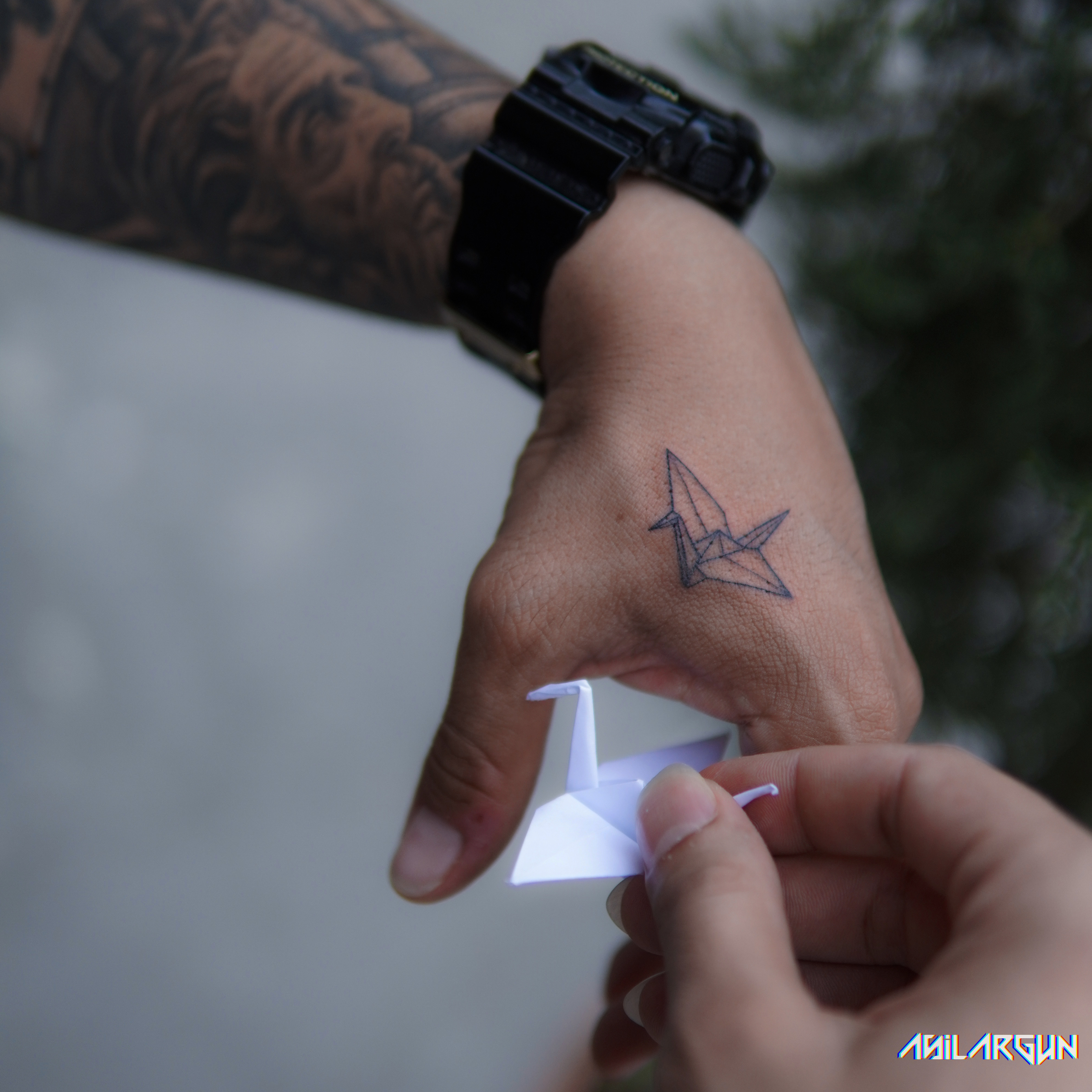
Do fine line tattoos fade quickly?
Every tattoo changes gradually because skin is a living surface. A well-planned fine line tattoo does not have to disappear quickly, but extremely tiny details and lines placed too close together may lose definition as the years pass. Longevity is influenced by the original design, line spacing, application, placement, sun exposure, skin characteristics and aftercare.
An honest artist should adapt the drawing instead of promising that an impractically tiny reference will remain identical forever. Sometimes increasing the size slightly, opening the negative spaces or simplifying one detail makes the final work much stronger.
How small can the design be?
The smallest technically possible size is not always the best artistic size. A design needs enough room for separate lines to remain distinct. Text must have adequate letter height and spacing; botanical details need breathing room; micro portraits need carefully selected tonal information.
I evaluate the idea according to the body area and its essential features. If the requested scale weakens the design, I explain the reason and suggest a size that protects its character.
Which placements work well?
Forearm, upper arm, shoulder, calf and thigh often offer relatively stable surfaces and useful space. Wrist, fingers, hands, feet, elbows and other high-movement or high-friction areas can require different expectations because they face frequent washing, rubbing, bending or sun.
Placement should also be judged while the body is moving. A line that looks straight on a flat image may need to follow an arm, shoulder or rib curve. The stencil stage is therefore part of the composition, not a formality.
Does a fine line tattoo hurt less?
Pain is personal and depends heavily on placement, session length and individual sensitivity. Fine line work can feel lighter than dense filling in some cases, but a thinner-looking tattoo is not automatically painless. Areas with less soft tissue, frequent nerve endings or close proximity to bone are often more sensitive.
Arriving rested, eating beforehand and avoiding alcohol makes the session easier to manage. Do not use numbing products without discussing them with the artist first.
How long does healing take?
The surface usually settles progressively over the first weeks, while deeper recovery continues longer. Temporary redness, mild sensitivity, dryness and flaking can occur. Do not pick peeling skin or scratch the tattoo.
Follow the instructions given for your specific tattoo. The American Academy of Dermatology also recommends gentle care, moisturising and sun protection for tattooed skin. Seek medical advice if redness or pain worsens, swelling increases, pus appears, fever develops or you are worried about an unusual reaction.
For a detailed daily routine, read the tattoo aftercare guide. You can also review dermatologist guidance from the American Academy of Dermatology.
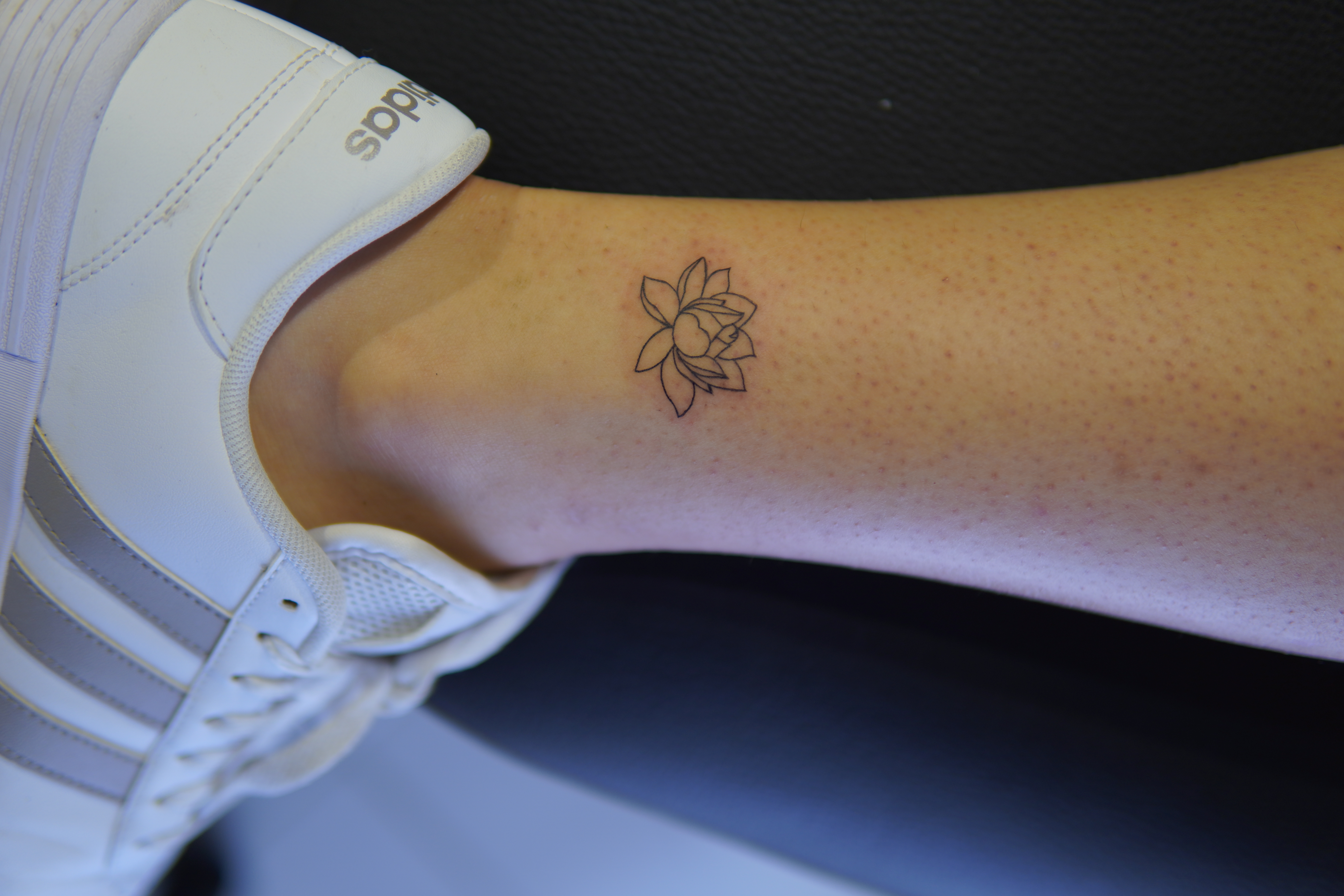
Planning a tattoo during an Antalya holiday
Antalya's sun, sea and pools are important planning factors. A fresh tattoo should not be treated like healed skin. Avoid scheduling it immediately before days of swimming, intense sun, sauna, heavy sweating or activities that cause repeated friction.
If you are travelling, reserve the appointment in advance and leave a calm recovery window. Tell me your flight and holiday plan when booking so we can choose a sensible day.
How do I choose a fine line tattoo artist?
- Look at healed work when available, not only fresh close-up photographs.
- Check whether lines, curves and small junctions appear controlled.
- Choose an artist who can explain size and placement honestly.
- Ask whether the design will be adapted to your body rather than copied unchanged.
- Pay attention to hygiene, single-use materials and clear aftercare communication.
A portfolio should show judgment as well as technique. Since 2010, my work across painting, mural art and tattooing has shaped the way I approach composition, anatomy and personal symbolism.
What affects the price?
Price depends on size, complexity, placement, drawing time, detail density and expected session duration. Two tattoos with the same centimetre measurement can require very different preparation and application. For current starting prices and examples, see the Antalya tattoo prices guide.
For an accurate quote, send the idea, approximate centimetre size, body placement, reference images and your preferred date. The reference is a conversation tool; the final design can be personalised rather than copied.
How the custom design process works
- Idea: You share the story, symbol or visual direction.
- Scale and placement: We choose proportions suitable for both the design and the body.
- Drawing: I develop a personal composition in my own visual language.
- Stencil: We assess position and movement on the body before application.
- Session and care: The tattoo is applied and you receive clear aftercare guidance.
Frequently asked questions
Can fine line tattoos be coloured?
Yes, although many examples use black or black-and-grey. Colour can be incorporated when it supports the composition and suitable contrast can be maintained.
Can a photograph become a fine line tattoo?
Yes, but it usually needs interpretation. The strongest contours, silhouettes or emotional details are selected rather than trying to compress every photographic detail into a tiny area.
Is a touch-up always necessary?
No. The need depends on healing, placement, skin and the work itself. The tattoo should first be allowed to heal fully; then it can be evaluated calmly.
Can I bring my own drawing?
Yes. I can assess whether it is suitable for tattooing and adapt line weight, spacing and placement while protecting its meaning.
Is fine line suitable for a first tattoo?
It can be. The better question is whether the subject, scale and placement suit your expectations. The first tattoo guide will help you prepare.
Book a fine line tattoo consultation in Antalya
Explore my tattoo portfolio and send your idea through the appointment form. You can also contact the studio on WhatsApp with your reference, placement, approximate size and preferred date. Consultations are available in Turkish and English at Asil Argun Art & Tattoo Studio in Muratpaşa, Antalya.