Realism Tattoo Guide: Portraits, Detail & Long-Term Planning
A practical guide to realism tattoos in Antalya: references, portrait likeness, size, placement, sessions, pricing and choosing the right artist.

Realism tattooing is not simply the transfer of a photograph onto skin. A strong result depends on choosing the right reference, simplifying detail where necessary and designing the image around the body. The goal is not only to create an impressive tattoo on the first day, but to build a composition that remains readable as it settles and ages.
I have worked across tattooing, canvas painting and large-scale murals since 2010. That background shapes the way I approach realism: light, depth, anatomy and composition are considered together rather than treated as separate details.
What is a realism tattoo?
A realism tattoo aims to create convincing volume, texture, light and likeness. Portraits, animals, statues, eyes, botanical subjects and cinematic scenes can all be interpreted in a realistic language. Black-and-grey work relies on value and contrast; colour realism adds temperature and colour relationships to the same foundation.
Realism does not mean copying every pixel. Skin is a living surface, so tiny details may need to be combined, enlarged or removed. A tattoo that is designed intelligently for its scale will usually read better than a crowded image that tries to contain everything.
Which reference images work best?
The reference image is the starting material. The strongest references generally have:
- clear focus and enough resolution to see essential forms;
- directional light that separates highlights, midtones and shadows;
- a natural angle without heavy filters or distortion;
- visible texture in the important areas;
- permission to use the image when it belongs to a photographer or artist.
Several images can be used to develop an original composition. For example, the pose may come from one reference, the light from another and surrounding elements may be drawn specifically for the wearer. This keeps the work personal instead of reproducing someone else's tattoo.
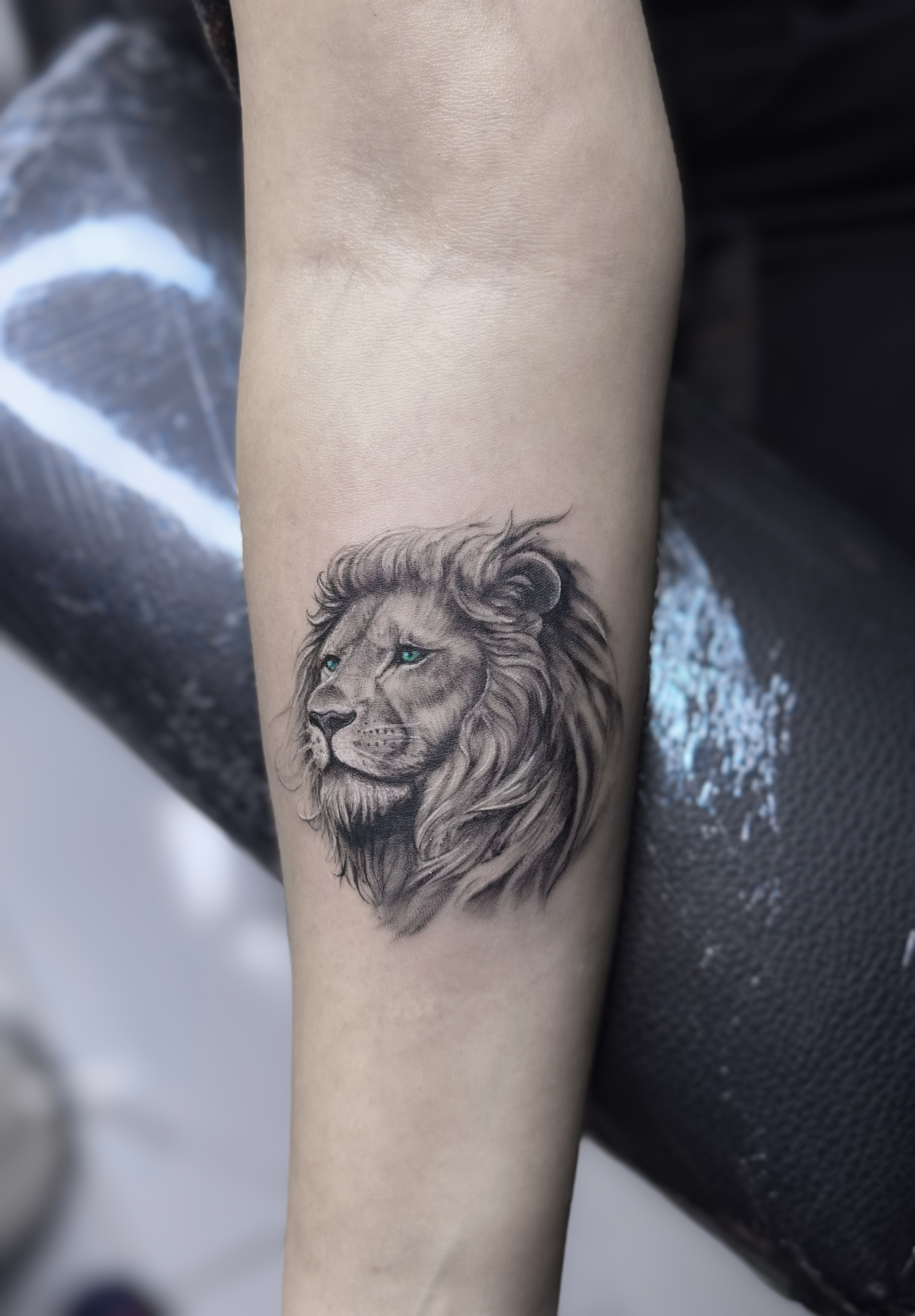
Size and placement determine the level of detail
Every line and tonal transition needs physical space. A portrait with expressive eyes, hair and subtle skin tones cannot be reduced indefinitely without losing clarity. The correct size depends on the subject, the amount of detail and the body area.
Flatter areas such as the outer upper arm, thigh, calf and back can offer a stable field for detailed work. Curved areas are not a problem, but the composition must wrap intentionally. Before the session, I evaluate the design at real scale and adjust it to the body's movement rather than treating the skin like a flat sheet.
Portrait realism: likeness and character
In a portrait, likeness can depend on a few millimetres around the eyes, mouth and silhouette. That is why a clean, well-lit reference matters. A meaningful family photograph can still be usable even if it is old; sometimes several photographs are needed to understand the face before the final drawing is built.
I also consider the mood of the portrait. Background texture, negative space and supporting symbols should strengthen the person rather than compete with the face.
Black-and-grey or colour realism?
Black-and-grey realism places the emphasis on value, contrast and texture. It can suit portraits, sculpture, animals and dramatic scenes particularly well. Colour realism can preserve characteristic colour relationships and create a different emotional atmosphere, but the palette must still work with the wearer's skin tone and the chosen scale.
Neither option is automatically more realistic. The right choice depends on the subject, the surrounding tattoos, the placement and the visual language you want to carry.
How many sessions does a realism tattoo require?
A small, focused composition may be completed in one session. Larger portraits, half sleeves and full sleeves often benefit from multiple sessions. Dividing the work allows careful attention to structure and reduces the temptation to rush dense areas.
Session length and spacing are planned after the design, dimensions and placement are clear. Healing varies from person to person, so follow the artist's individual instructions and allow the area to recover before continuing. For practical guidance, read the tattoo aftercare guide.
What affects the price?
Realism tattoo pricing is influenced by size, reference quality, design preparation, placement, detail and estimated session time. Two tattoos with the same dimensions may require very different amounts of work. A reliable quote therefore begins with the idea, body area and approximate size—not a generic price per centimetre.
You can also read the Antalya tattoo prices guide for a transparent explanation of the factors behind a quote.
How to choose a realism tattoo artist
- Look at healed work as well as fresh photographs when available.
- Check whether faces, textures and tonal transitions remain clear.
- Compare several pieces, not only one popular image.
- Ask how the composition will be adapted to your body.
- Choose an artist whose visual language fits the atmosphere you want.
A good consultation should leave you with a clear understanding of scale, placement, sessions and aftercare. It should also create room for the artist to make decisions that protect the design's readability.
Planning a realism tattoo in Antalya
My studio is in Elmalı, Muratpaşa, in central Antalya. Local clients and visitors can begin by sending the subject, placement, approximate dimensions and reference images. If you are travelling, include your available dates and allow time for the first stage of healing before sea, pool and intense sun exposure.
Frequently asked questions
Can a realistic portrait be very small?
It can be reduced only to the point where the essential features still have enough room. If likeness is the priority, a slightly larger format is often the stronger decision.
Can several people or objects be combined?
Yes. The composition should be redesigned so that the focal point remains clear and the secondary elements support it.
Can realism be added to an existing tattoo?
Sometimes. The existing work, available space and contrast must be evaluated in person or through clear photographs.
Do I need the final design before contacting the studio?
No. A subject, mood, body area and a few references are enough to start. The design develops through the consultation.
How do I request an appointment?
Explore the tattoo portfolio, then send your idea and reference images through the appointment page or WhatsApp. I will reply with the questions needed to define the project.
A successful realism tattoo should carry the subject's character while belonging naturally to the body that wears it.